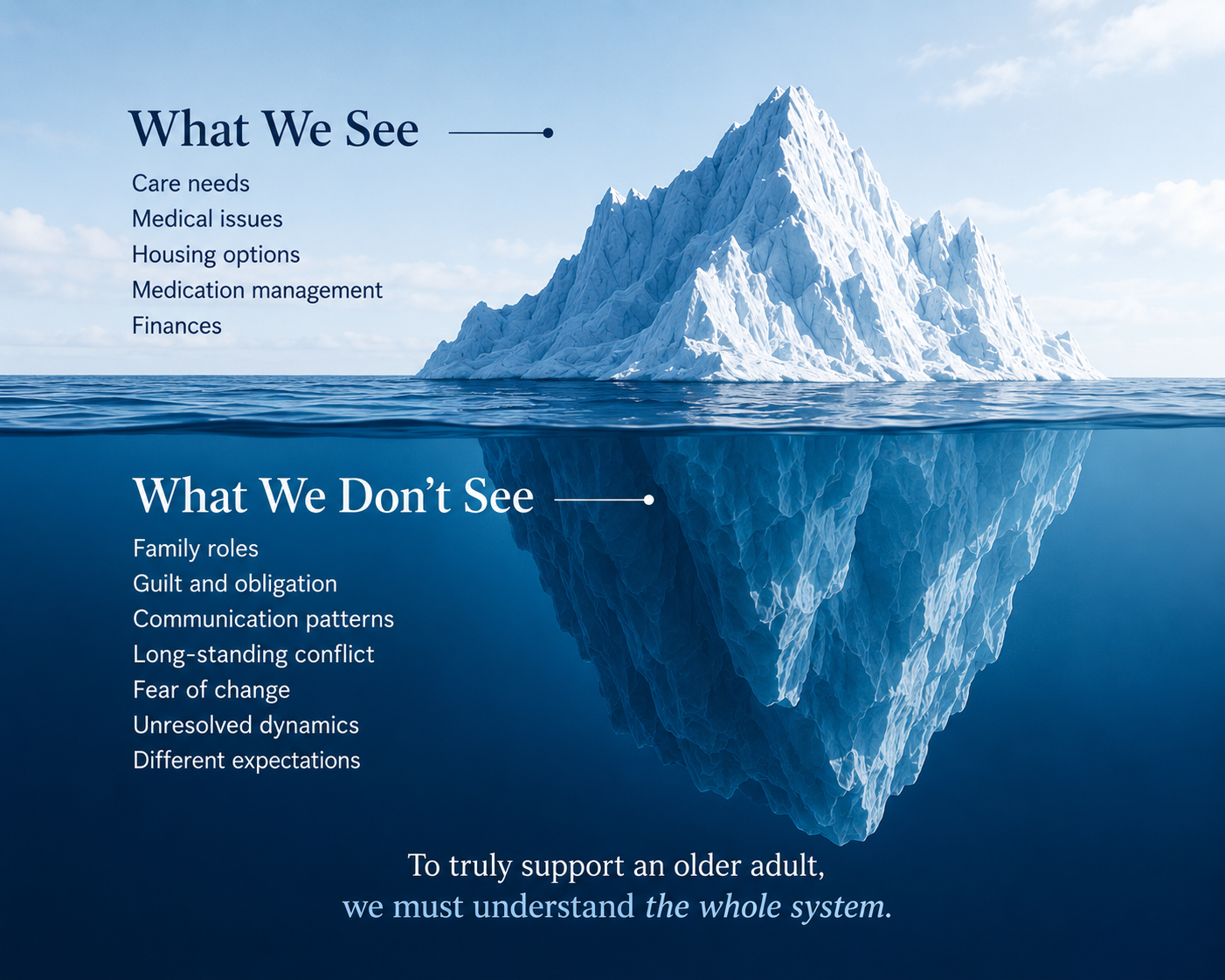


We plan for retirement. We plan financially, talk about where we might live, update our wills, appoint Powers of Attorney, and think about what we want the next chapter of life to look like. But there is one part of aging that we are remarkably bad at planning for: what happens when something changes?
After more than 20 years working with older adults and their families, I can tell you that many eldercare conversations don't begin around a kitchen table with plenty of time to consider the options. They begin after a fall, from a hospital room, when one spouse can no longer manage the other's care, or when an adult child realizes that the little things they've been noticing for the past year aren't so little anymore.
Suddenly, a family that has never discussed care needs, housing preferences, finances, family roles, or what Mom or Dad actually wants is expected to make several significant decisions at once. That's not really planning. That's crisis management.
Eldercare planning is bigger than deciding where you'll live
When people hear "eldercare planning," they often jump immediately to home care, retirement living or long-term care. Those are certainly pieces of it, but good planning starts much earlier. It's really about understanding what your options are, what matters to you, and what might need to change if your circumstances change.
That means looking at your home and asking whether it would still work if health or mobility changed. Could it be modified? What would make staying there realistic, and at what point might it no longer be?
It means understanding care. What supports are available? Which are publicly funded and which are private? What might increasing care needs actually cost, and has anyone accounted for that?
It also means thinking about housing, even if you have absolutely no intention of moving right now. If a move eventually became necessary or desirable, what would matter most? Location? Social connection? Care availability? Proximity to family? Cost?
And then there are the people involved. Who is going to help if help is needed? Are we assuming an adult child or spouse will take on a role they've never actually agreed to? Are Powers of Attorney current, and does the person appointed understand both their responsibilities and your wishes?
Perhaps most importantly, what does the older adult actually want?
Planning doesn't mean you've made a decision
I think this is where a lot of people get stuck. Planning can feel like admitting something is going to happen. If I research retirement homes, does that mean I'm moving? If I talk about home care, am I saying I won't be independent? If we discuss what happens when Dad can no longer drive, are we taking away his keys tomorrow?
Of course not. Information is not a decision.
Good eldercare planning creates options. It gives you time to understand what is available before you desperately need it. And because aging rarely follows a perfectly predictable path, I encourage people not to build one perfect plan. Have a Plan A, understand what Plan B might look like and, sometimes, have a Plan C.
Professionals have a role here, too
This is particularly important for those of us who work with older adults and their families. Financial planners, lawyers, healthcare professionals, employers, home-care providers, senior-living professionals and other trusted advisors are often in a position to see a transition coming long before a family considers themselves "in eldercare."
We don't need to have all the answers, but we can ask better questions. What happens if your care needs change? Would your home still work? Does your financial plan account for private care? Who would step in to help? Does the person you've appointed as Power of Attorney actually know what you want?
These conversations don't have to be frightening. When they happen early enough, they can actually give people more control, because we're talking about possibilities rather than reacting to an emergency.
The goal isn't to predict aging
Nobody can build an eldercare plan that anticipates every diagnosis, fall, family conflict or change in circumstance. That's not the point. The goal is to understand your preferences, know the resources available to you, identify the people who may be involved, and recognize where the pressure points could be before you're making decisions under pressure.
The best eldercare plan isn't necessarily the one you eventually follow. It's the one that means you don't have to start from zero when something changes.
Looking for somewhere to start? Tea & Toast has created free eldercare planning tools and resources for older adults, families, and professionals.
Find the resources at teaandtoast.ca/download