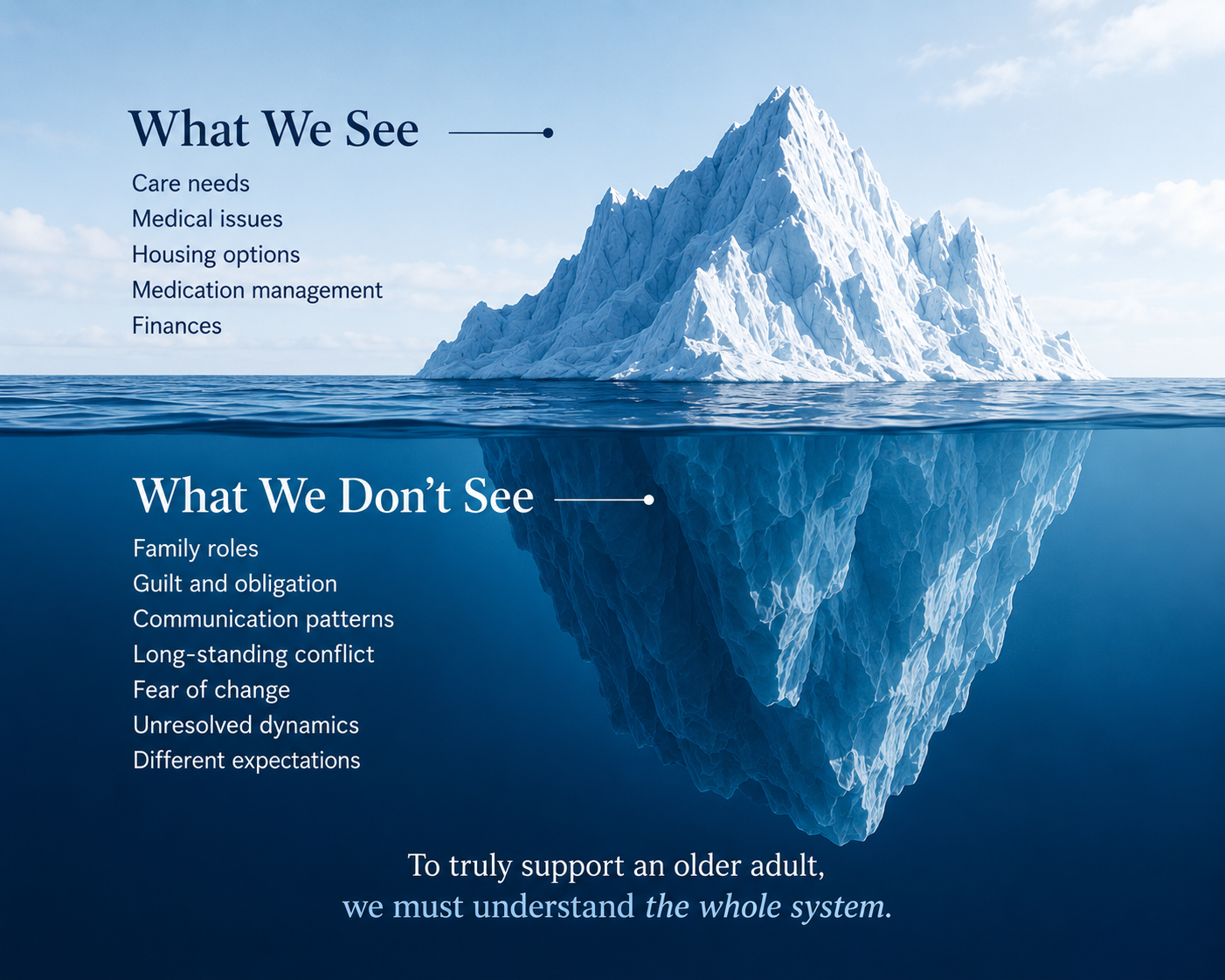


Over the past year, public conversations about cognitive decline have become louder, sharper, and far more hostile, particularly in high-profile leadership and celebrity discussions. When a powerful public figure shows signs of confusion, memory lapses, or disorganized speech, the word dementia is increasingly weaponized.
And that should concern all of us. Not because of politics, but because of people.
Dementia Is Not a Character Flaw
Dementia is a medical condition.
It is not a punchline.
It is not shorthand for stupidity, incompetence, or moral failure.
Yet we are watching the term be used casually, sometimes cruelly, as a way to discredit or demean. When anger and ridicule are attached to the word dementia, the harm doesn’t stop with the individual being criticized. It spills over onto millions of families quietly living with this reality every day.
The Stigma Has Real-World Consequences
When dementia is framed through mockery or hostility:
- Families hesitate to seek assessment or diagnosis
- Caregivers feel shame instead of support
- Early warning signs are minimized or ignored
- People living with dementia are reduced to stereotypes rather than treated as whole humans
And perhaps most concerning of all, dementia becomes an insult—a lazy explanation for mistakes or behaviors we don’t like.
That’s not awareness. That’s stigma.
A Critical Point We’re Avoiding
There’s another uncomfortable issue being overlooked in these conversations.
If a person were experiencing cognitive decline consistent with dementia, best-practice dementia care guidelines are very clear: decision-making capacity must be assessed, and when necessary, decision-making authority is reduced or removed to protect both the individual and those impacted by their decisions.
This isn’t punishment.
It isn’t political.
It’s standard care.
In families across the world, we routinely step in when a loved one can no longer safely manage finances, consent to medical treatment, or make complex decisions with far-reaching consequences. We do this not to strip dignity, but to preserve safety, stability, and well-being.
To suggest that the same medical and ethical standards should not apply simply because someone holds power sends a deeply troubling message about how we value cognitive health.
Compassion and Accountability Can Coexist
It is entirely possible, necessary, even, to hold two truths at the same time:
- Cognitive decline deserves compassion, respect, and medical understanding
- Roles that require high-stakes judgment, impulse control, memory, and clarity demand cognitive capacity
Acknowledging this isn’t partisan. It’s responsible.
What is harmful is turning dementia into a weapon, mocking it when it suits a narrative, while ignoring what it actually means in real life for real people.
The Slippery Slope We Should Refuse to Slide Down
Today, dementia is used to discredit a public figure.
Tomorrow, it becomes the explanation for any mistake.
“Oh, they forgot—must be dementia.”
“They’re acting differently—probably dementia.”
“They’re not sharp anymore—clearly dementia.”
That language doesn’t just hurt public discourse, it hurts families sitting at kitchen tables, trying to figure out next steps for someone they love.
We Can—and Must—Do Better
Dementia advocacy has spent decades pushing toward dignity, education, and humane care standards. We should not undo that progress by allowing frustration, fear, or anger to distort the narrative.
Dementia is not a moral failure.
It is not a political tool.
And it is not something to be thrown around lightly.
It is a medical condition, one that demands compassion and appropriate safeguards, no matter who is affected.